Craft Techniques
Craft Techniques is the full toolkit of fiction-writing mechanics — point of view and reader capital, sentence structure, transitions, description technique, and the show-don’t-tell principles that make scenes work on the page. It’s broader than the Scene Craft category, which focuses specifically on visual, cinematic scene writing; here you’ll find the wider set of craft tools novelists use at the sentence and paragraph level. Built from fifteen-plus years of coaching novelists and training at the Iowa Writers’ Workshop, this is where to dig into the mechanics once you know roughly what you’re working on.

Sentence Structure in Fiction: How to Write Stronger Scenes One Sentence at a Time
What Is Sentence Structure?
Sentence structure in fiction is how you put together your words, phrases, clauses, and use sentence lengths to control a reader’s experience. Novelists use sentence structure to shape pacing, build tension, emphasize important moments, and develop narrative voice.
The most important element of Sentence Structure is control. To keep your reader connected, it’s important[…]
How to Revise a Novel: Start With Structure, Not Sentences
You finished your draft. Maybe it was last week. Maybe it was last year. Maybe it’s been sitting in a folder for longer than you’d like to admit.
Either way, you’re in the same place a lot of writers find themselves: you have pages, and you don’t quite know what to do[…]

How to Pants Your Way to a Novel
The middle path between plotting and pantsing that actually gets books finished.
“Once we really got into it, I actually found the outlining kind of annoying,” a client told me recently. She’d tried detailed plotting systems, character worksheets, and extensive planning documents. “It’s like, no, I guess I’m just going to sit[…]

Make Readers See Your Scenes
The Best Books Make Readers See Their Scenes.
Yours Can, Too.
There’s a reason certain books get finished and certain books get put down.
It’s not the premise. It’s not the genre. It’s not even the writing, exactly — not[…]

Have You Ever Moved Three Times in Two Weeks?
A couple of years ago, I helped a friend move apartments. By the end of the day, she was surrounded by boxes in a new living room, trying to figure out where to put the couch. It took her about a week before the place started to feel like home — before she stopped reaching[…]
Writing Craft Advice from Denis Johnson
Press play to listen to a craft lecture by Denis Johnson.

In 1999 I had the good fortune to study with one of my heroes, the novelist and short story writer Denis Johnson (Train Dreams, Jesus’ Son, The Name of the World, Tree[…]
When Spitballing Fails: Writing as the Tool for Discovery
Here’s a scenario I see often in my coaching work: A writer has a plot problem. Something isn’t clicking—maybe the motive doesn’t feel strong enough, or there’s a gap in the logic, or a character’s actions don’t quite make sense. So we talk it through. We throw ideas at the wall. We brainstorm. We spitball.
And[…]

The Reader’s Backpack: What You Ask Us to Carry
Two essential metaphors that will change how you think about reader engagement.
“Call that the banana in the backpack metaphor,” I told a writer after explaining why his story opening wasn’t working. He’d been telegraphing plot developments before they happened, essentially telling readers what was in the backpack before asking them to be curious about it.
This[…]

I’ve Told You to Show, Not Tell. Here’s the Rest of the Lesson
You already know the rule. Every writing teacher, every craft book, every workshop you’ve ever sat in has said it: show, don’t tell. And if you’ve been working on your writing for any length of time, you’ve probably internalized it. You’ve cut the adverbs. You’ve replaced “she was nervous” with a physical action. You’ve learned[…]

The Hidden Cost of Point of View Shifts: Why Your Reader Capital Matters
Every time you switch point of view in your novel, you’re asking your reader to make an adjustment. They have to leave one character’s head, reorient themselves, and settle into someone new. This cognitive shift isn’t free—it costs something I call reader capital.
Understanding this cost, and learning how to minimize it, can make the difference[…]

How to Focus Your Story: Why Cutting Content Makes Your Writing Stronger
I was working with a novelist who’d written 87,000 words of a historical thriller. He’d done extensive research, created multiple compelling characters, and woven together fascinating historical elements including Ethiopian Jewish traditions, Knights Templar mysteries, and World War II espionage.
His problem wasn’t lack of material—it was too much material.
“There’s so much I want to include,”[…]
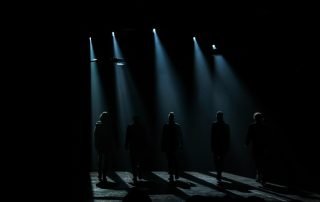
How to Start a Novel: The Fastest Fix for a Weak Opening Scene
The Play That Started in the Dark
The most common problem in opening chapters is also the fastest to fix. It’s not your dialogue. It’s not your voice. It’s not your plot. It’s something so fundamental that you probably can’t see it on your own — but a reader notices it immediately.
Let me explain with a[…]

Your Character Needs a Body
Immersive fiction depends less on what a character sees and more on what they physically do.
A writer sent me the opening pages of her novel recently. The setup was strong — a complicated woman arriving at a place she didn’t want to be, surrounded by people who weren’t sure she belonged. The atmosphere was tense,[…]

What “Trust the Reader” Actually Looks Like on the Page
The phrase “trust the reader” gets repeated in writing workshops constantly, but it’s rarely defined in practical terms.
I was reading a client’s chapter recently — a scene where two men sit down to negotiate a backroom deal in 1950s Havana. There’s no shouting. No guns on the table. One of them lights a[…]

Build the Bridge: 3 Kinds of Transitions
Thank you to Jane Friedman for sharing this post on her blog last week.
A writer recently told me she was struggling with her memoir structure. She’d written scenes about a difficult period in her life, and she wanted to include a memory from several years earlier that provided important context.
“How do I make[…]
Static vs. Dynamic Description Part 2: Implementation Strategies
This is the second part of our exploration of static versus dynamic description. In part one, we defined these concepts and explained why dynamic description matters for reader engagement.
The Overcompensation Problem in Dynamic Description
When writers first attempt to transition from static to dynamic description, they often fall into what I call “the compressed action[…]
Static vs. Dynamic Description: Understanding the Difference
One of the most transformative changes writers can make to elevate their prose is mastering the distinction between static and dynamic description. This seemingly subtle difference fundamentally changes how readers experience your story world and connect with your characters.
During a recent coaching session with a crime fiction writer, I found myself repeatedly drawn to this[…]

When Scene Work Becomes Instinct
What happens when a writer stops fighting the immersive approach and starts trusting it.
Many fiction writers struggle to move from checklist writing to immersive scene work — and the shift often changes not just their prose, but their entire writing experience.
“I’m relaxed,” a writer told me during our recent session. “I’m not trying[…]

Writing in Scene: Why It Makes Fiction More Engaging (and More Fun to Write)
The surprising relationship between scene work and creative joy.
Many fiction writers struggle with scene vs. summary — defaulting to information dumps instead of putting readers inside lived moments.
“That’s more fun to write than a list of information,” a client said after rewriting his opening chapter. He’d just discovered something that transforms the writing experience: staying[…]

The Verb Audit: A Simple Tool That Will Transform Your Writing
I was teaching a workshop recently when a student asked, “How do I know if my sentences are working? I can see the scene in my head, but when I read it back, something feels flat.”
This is one of the most common problems writers face: the gap between the vivid story in your imagination and[…]

Your Character’s Secret Superpower: Being Present
A writing craft technique for fiction writers who want stronger, more immersive scenes.
Here’s a superpower you can give your character that readers instinctively respond to:
The ability to stay fully present in every scene.
No internal static.
No constant analysis.
Just clear, grounded attention to what’s happening right now.
The temptation is to explain everything through internal thought. But often,[…]

The Thought Trap: Why Most Writers Break Narrative Voice (And How to Fix It)
Many fiction writers struggle with narrative voice consistency — especially when writing character thoughts in close third person POV.
I was working with a writer recently on a compelling scene where his protagonist encounters something impossible—a mysterious bronze artifact that seems to defy the laws of physics, hovering in shallow water.
The description was vivid, the tension[…]

Interior Landscape vs. Thought Bubbles: Why Showing Beats Telling (Even When You’re Inside Their Head)
In my recent post about narrative voice consistency and italicized thoughts, I focused mainly on third-person narration. But what about first person? Surely when you’re already inside a character’s head, you can transcribe their thoughts directly without breaking voice?
Not quite.
Many fiction writers struggle with first person narrative voice, especially when deciding whether[…]

From Skeleton to Flesh: Why Your First Draft Is Just the Beginning
How revision transforms structural bones into living, breathing scenes
Many fiction writers misunderstand the difference between drafting and revising a novel—expecting the first draft to feel finished when it’s only meant to provide structure.
“I think of it as putting meat on the bones,” I told a writer recently as we worked through the final chapters of[…]

When Do You Know Your First Draft Is Done?
The most honest answer might surprise you.
“How do you know when you’re writing the words ‘the end’?” a writer recently asked me. She’d been hitting her daily word count target religiously—exactly 345 words per day, aiming for a 64,600-word first draft by a specific November date. But as she approached the end of her novel,[…]